South Salt Lake, Utah: Bungalows, Breweries, Murals, and a Real Estate Market That's Still Affordable
South Salt Lake is the Salt Lake Valley's most creative, walkable, and still-affordable corner. A guide to the city, its housing market, and what to look for in an agent who actually works here.
If you're buying or selling a home in South Salt Lake, you're operating in one of the most distinctive — and rapidly evolving — submarkets in the Salt Lake Valley. This isn't a sleepy suburb or a polished new-build community. It's a small, dense, historically working-class city that has spent the last several years reinventing itself as the valley's most interesting destination for breweries, murals, and small creative businesses, all while remaining one of the few places left where a buyer can still find a starter home under $500,000. This guide will walk you through what makes South Salt Lake different, what the numbers actually show in today's market, and the specific skills you should look for in any agent you hire here.
Where Is South Salt Lake, and Why Are People Paying Attention?
South Salt Lake is its own incorporated city, but you'd be forgiven for assuming it's a Salt Lake City neighborhood — it sits directly south of downtown, sandwiched between Salt Lake City to the north and Millcreek and Murray to the south. The city covers roughly seven square miles, bounded loosely by 2100 South on the north and 3900 South on the south, and it straddles both sides of State Street and Interstate 15. From most South Salt Lake addresses, you can be in downtown Salt Lake City in under ten minutes when traffic cooperates.
That central location has been a major driver of the city's recent identity shift. Two TRAX light rail lines run through South Salt Lake, and the S-Line streetcar — which opened in 2013 — connects Central Pointe Station to Sugar House along 2100 South. According to a Salt Lake Tribune analysis, the streetcar corridor has spurred up to $2 billion in economic development since opening. South Salt Lake is also where I-15 and I-80 converge, which is part of why so many warehouses, distribution centers, and creative-use industrial spaces ended up here in the first place.
South Salt Lake is also one of the most racially and ethnically diverse cities in Utah, with a population that is roughly 54% White, 14% other race, 12% Asian, 4% Native American, and 4% Black or African American. The city has long been home to large Bosnian, Vietnamese, Russian, Armenian, and Latin American communities, and that diversity is reflected in the businesses lining its main streets.
Median household income in South Salt Lake runs lower than the Salt Lake County average — the city's own moderate-income housing program defines moderate income as $70,300 or less, against a county median of about $108,838. That income profile is part of why South Salt Lake remains comparatively affordable, and it's also part of what's drawing first-time buyers, investors, and small business owners who have been priced out of Sugar House and the east bench.
What's in South Salt Lake?
South Salt Lake punches well above its weight for things to do, and most of what makes it interesting has emerged in the past decade.
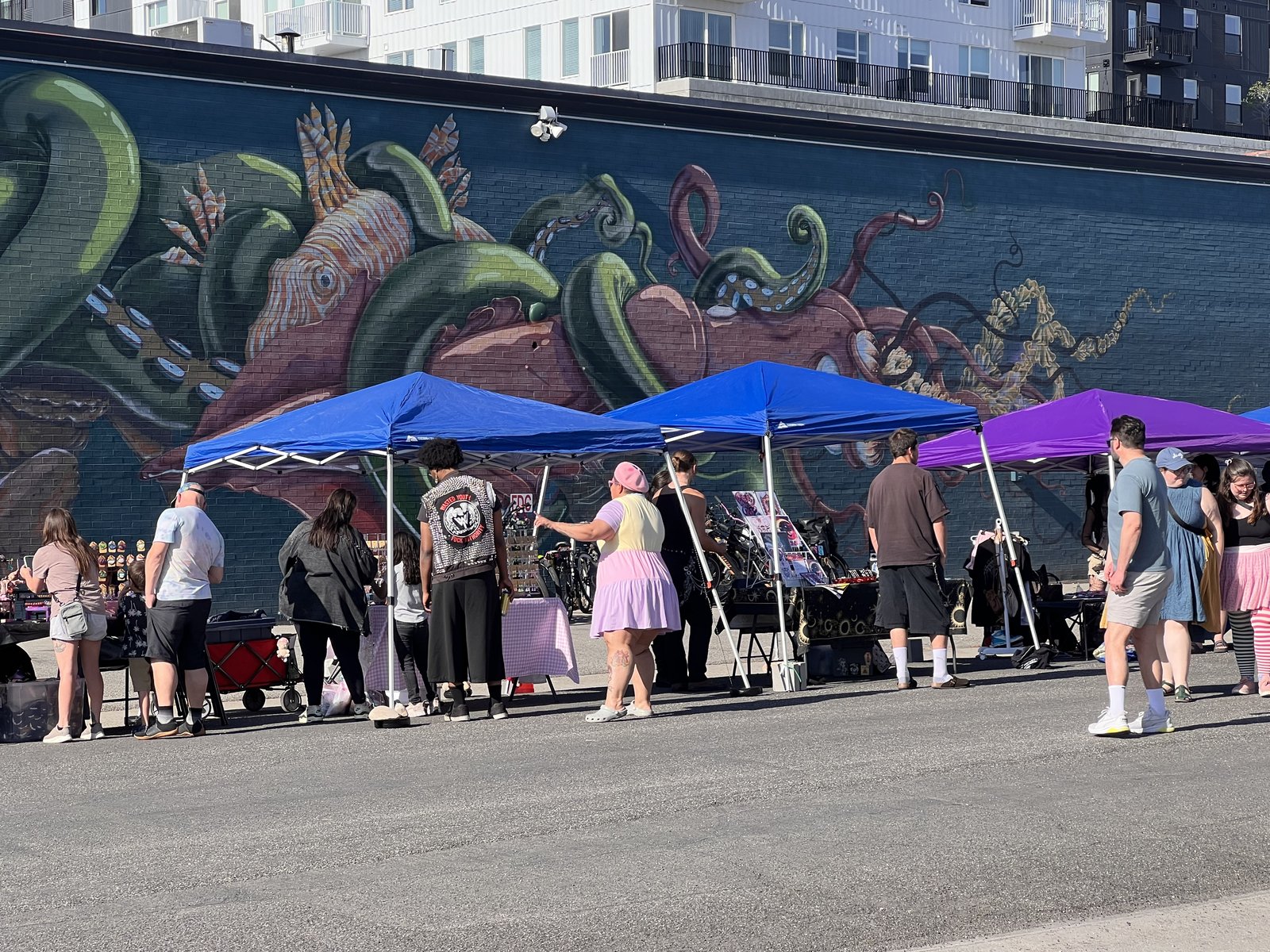
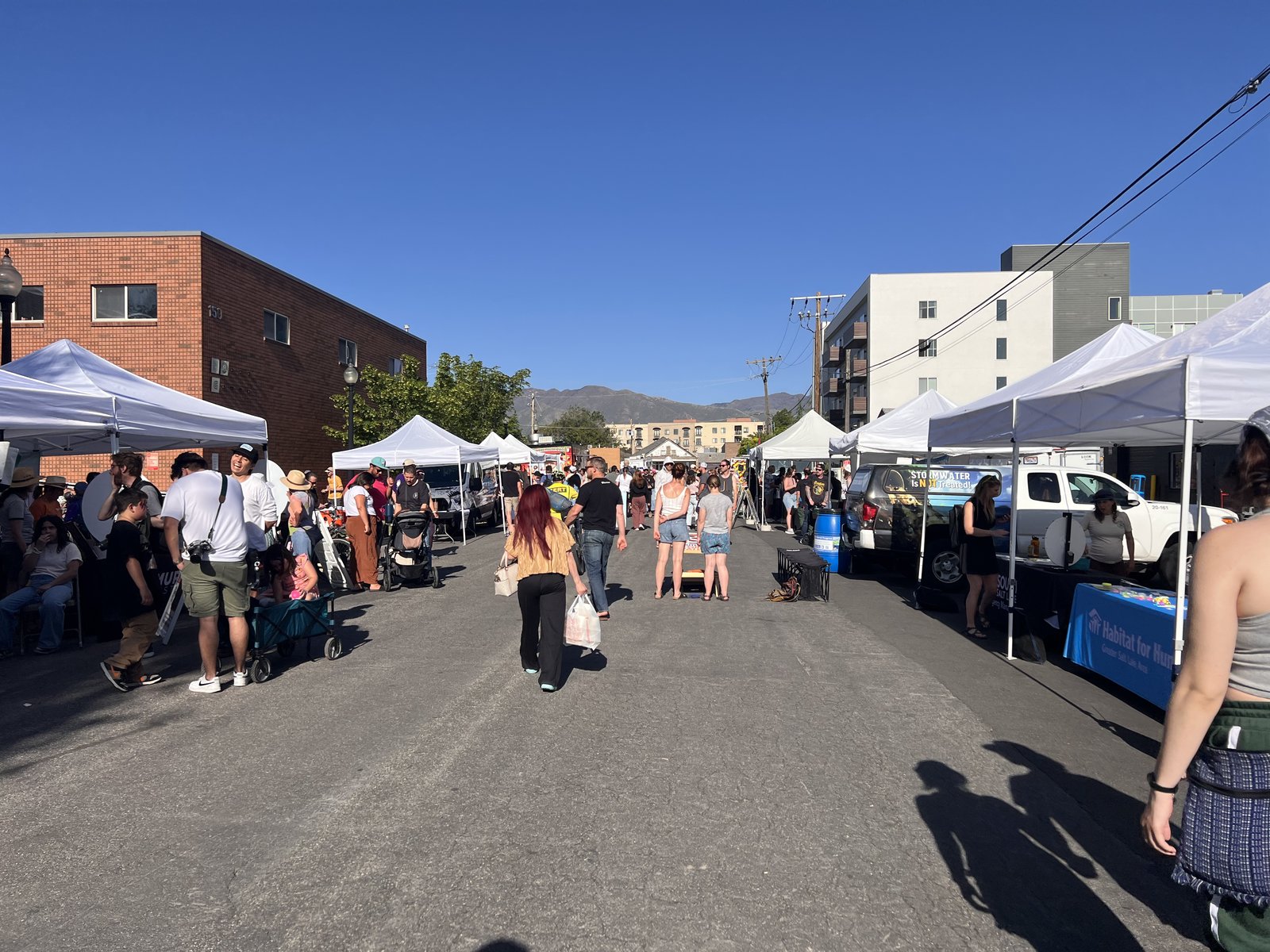
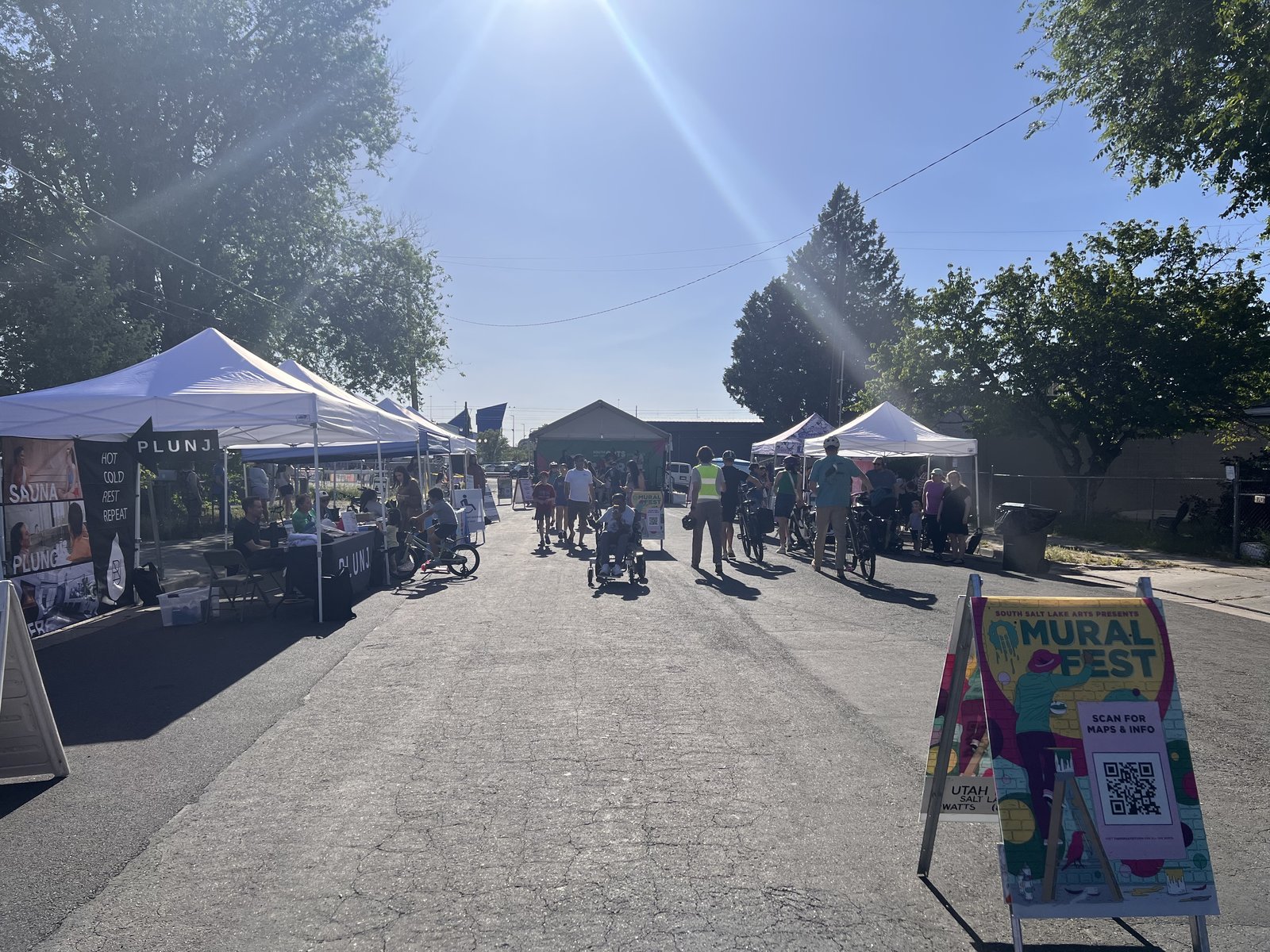
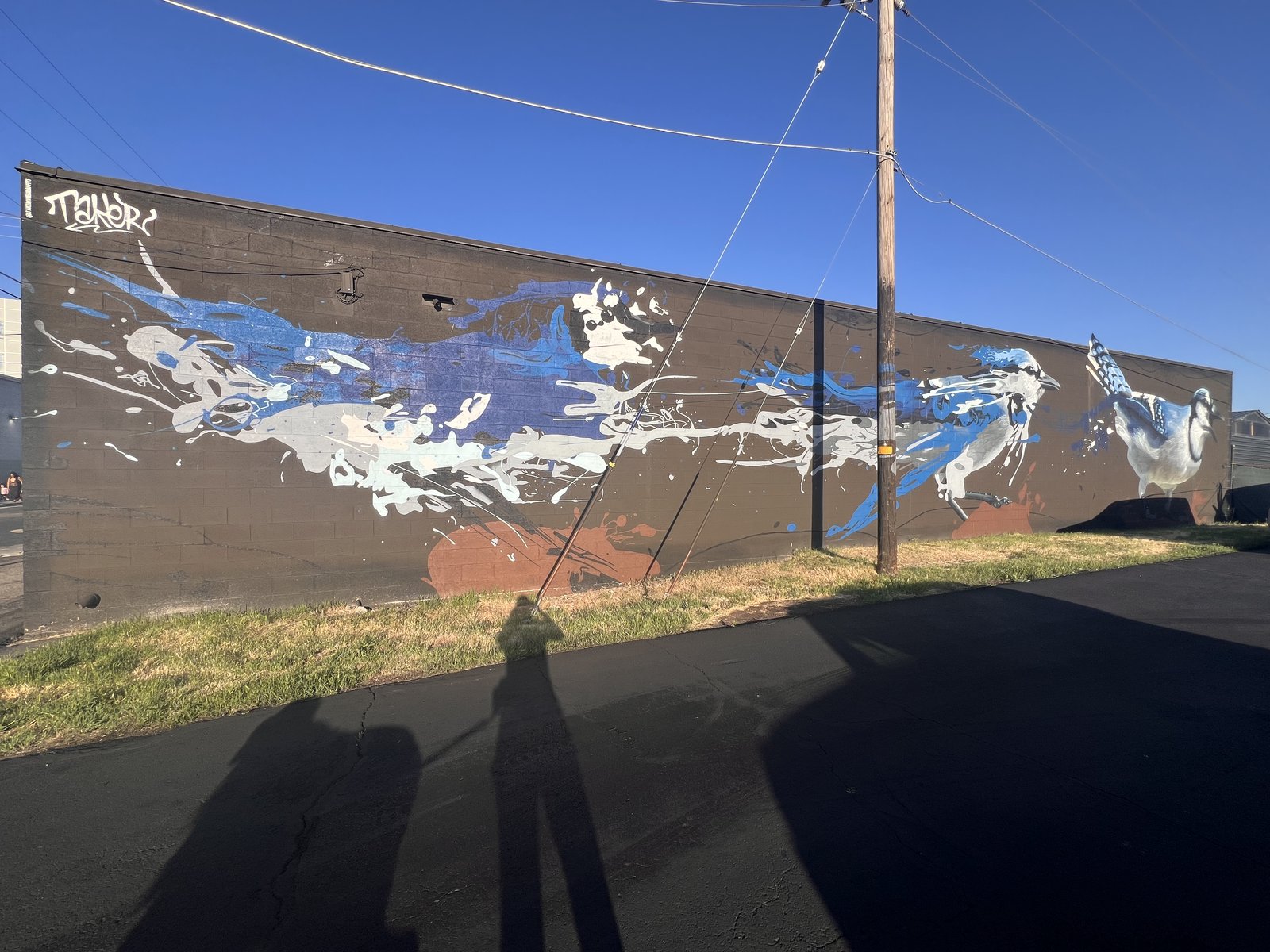
The clearest example is the Creative Industries Zone (CIZ), a designated district running between roughly 2100 South and 3000 South along West Temple. The CIZ is a deliberate, zoning-driven effort by the city to attract creative small businesses — breweries, distilleries, music venues, art studios, print shops, and design firms — into former industrial spaces. It has worked. South Salt Lake now hosts the largest concentration of street art in Utah, and the annual South Salt Lake Mural Fest, which started in 2018, has grown into one of the most-watched public art events in the state. Each spring, artists from around the country paint new murals on warehouse walls across the CIZ, with live music, food trucks, and brewery tie-ins making the district feel like a festival ground for a weekend.
South Salt Lake Mural Fest, 2026
A buzzing brewery scene has grown up around the CIZ. SaltFire Brewing, Shades Brewing, Grid City Beer Works, Level Crossing Brewing, TF Brewing, and Beehive Distilling all operate within a few blocks of each other. A casual afternoon doing a brewery walk in South Salt Lake is something a lot of valley residents do regularly, and it's increasingly part of how visitors experience the city.
For coffee, Cozy Coffee Lounge at 2580 South Main has become a destination in its own right — a Bosnian-influenced cafe known for its signature coffee brewed on hot sand and a warm, neighborhood feel that you don't always get in newer Salt Lake coffee shops. It's the kind of spot where you'll see remote workers, retirees, and brewery-bound twenty-somethings sharing the same room.
On the food side, South Salt Lake is one of the most internationally diverse dining destinations in Utah. The city is home to G&H African Market, Karim Bakery, Oh Mai (Vietnamese), Old Bridge Café (Bosnian), Arbat Grocery (Russian and Armenian), Best Chicken & Ribs, Contento (Mexican), and Mediterranean Market & Deli, among many others. South Salt Lake also includes a small but real Chinatown along State Street, with bakeries, bubble tea shops, and Asian grocery stores.
For greenspace, Fitts Park is the city's most beloved community park — a green oasis with three creeks, some of the oldest trees in South Salt Lake, three playgrounds, sand volleyball, and Mill Creek Trail running through it. The city hosts its summer concert series here. There are also smaller neighborhood parks scattered throughout the city, plus easy access to the Jordan River Parkway on the western edge.
Beyond what's inside the city limits, South Salt Lake's location is its quiet superpower. You're 15 minutes from downtown Salt Lake City, 20 minutes from the airport, 30 to 45 minutes from Park City, Alta, Snowbird, and Brighton ski resorts, and a short drive from Sugar House's shopping and dining. For people who work downtown and want to live somewhere with character but without the price tag of the avenues or 9th and 9th, South Salt Lake has become the obvious answer.
The South Salt Lake Housing Market: What the Numbers Actually Say
We analyzed 136 home sales in South Salt Lake from May 2025 through May 2026. That sales volume — a fraction of what a city like Draper or Herriman sees — reflects how small South Salt Lake is geographically and how much of its housing stock turns over slowly. Here's what the data reveals.
The Typical South Salt Lake Home
South Salt Lake's housing inventory is unusually mixed for a single small city. Of the 136 homes sold over the past year, 80 were single family detached, 33 were townhouses, 20 were condos, two were twin homes, and one was a mobile home. That's a much wider mix of housing types than you'd find in most of the valley's suburbs.
Across all property types, the median sold home was a 3-bedroom, 2-bathroom property of about 1,608 square feet on a 0.11-acre lot, with a median sale price of $452,150. Restricting to single family homes alone, the median bumps up to $497,250 for about 1,677 square feet on a 0.14-acre lot.
Garage data tells an interesting story. The median garage capacity across all sales was just 1 car, and only about 60% of homes sold had a garage at all. Among single family homes specifically, 61% had a garage, with a roughly even split between zero-garage homes (about 39%), one-car configurations, and two-car configurations. Many South Salt Lake homes were built before garages were a default, and converted carports, detached structures, or no garage at all are common.
Having a garage commands a meaningful premium even after accounting for the fact that garaged homes tend to be larger overall. Holding living square footage constant, a garage adds roughly $30,000 to $40,000 to a single family home's sale price in South Salt Lake — and each additional garage stall is worth roughly $20,000 on top of that. The pattern is clearest at the smaller end of the market, where homes between 800 and 1,600 square feet sell for $65,000 to $80,000 more with a garage than without. Buyers with a strict budget should expect to give up a garage to stay in the lower price tiers, while sellers with a two-car garage have a tangible feature worth highlighting in marketing and pricing.
The age of the housing stock is the single most defining feature of South Salt Lake real estate. The median single family home sold over the past year was built in 1947, and over 75% of single family sales were homes built before 1960. About 30 of the 80 single family sales were homes built before 1940. These are old, character-filled bungalows, cottages, and ranch-style homes — many beautifully maintained, many in need of meaningful work. About 5% of single family sales were brand-new construction (2020 or later), but new construction is much more common in the townhouse and condo categories, which have grown rapidly in recent years.
How Prices Break Down
The price distribution in South Salt Lake makes the market feel very different from most of the valley. Of the 136 homes sold in the past year:
9 sold under $300,000 — almost entirely condos and one mobile home
40 sold between $300,000 and $400,000
34 sold between $400,000 and $500,000
38 sold between $500,000 and $600,000
14 sold between $600,000 and $750,000
1 sold above $750,000
The vast majority of activity sits between $300,000 and $600,000, and almost nothing sells above $750,000. This is one of the few cities in Salt Lake County where a buyer with a budget under $500,000 still has real, regular options for a single family home. The median single family price-per-square-foot was about $307; across all property types, it was closer to $287.
Price Trends Over the Past Year
The South Salt Lake market has softened modestly over the past year, in line with broader Wasatch Front trends. From May through October 2025, the overall median sale price was $459,950. From November 2025 through May 2026, that median dipped to $432,500 — a roughly 6% decline. Single family pricing held up better than condos and townhouses in the later half of the year, suggesting that detached homes have been more durable in this slower market.
Median days on market over the full year was 39 days, and the median sold price was about 97.8% of original list price — meaning sellers, on average, accepted about a 2% concession off their first asking price before closing. That's a meaningful shift from the no-concession bidding wars of 2021 and 2022, and it tells you that buyers in today's market have leverage they didn't have a few years ago.
The Mix of New and Old
One of the things buyers and sellers should understand about South Salt Lake is that "new construction" almost always means a townhouse or condo project, not a single family home. The single family stock is overwhelmingly mid-century and earlier, and most teardown-and-rebuilds in the city have produced multi-unit infill rather than detached replacements. If you want a brand-new detached house, your options in South Salt Lake will be very limited; if you want a 1940s bungalow with hardwood floors and a chance to add value through renovation, you'll have plenty of choices.
What to Look for in a South Salt Lake Real Estate Agent
South Salt Lake rewards a different kind of agent than Draper, Herriman, or the east bench. The price points are lower, the homes are older, the deals are more nuanced, and the buyer pool is more varied. If you're newer to the process, our broader guides on what a real estate agent actually does and how to choose a realtor cover the fundamentals. Below, we focus on what's specifically different about hiring an agent for the South Salt Lake market.
For Sellers
Pricing accuracy in a softening, sub-$600K market. Most South Salt Lake sellers are operating in the $300K to $600K window, and accurate pricing in a cooling market matters more than ever. Look for an agent who can explain how their pricing recommendation accounts for recent comps within South Salt Lake specifically — not Sugar House or Murray — and who is realistic about current days-on-market and concessions.
Experience with older homes and their selling points. A pre-1960 bungalow needs to be marketed differently than a 2010 build. A good listing agent for South Salt Lake should know how to highlight the things buyers in this market actually want — original hardwoods, character, walkable streets, proximity to breweries and TRAX — and how to handle the inevitable inspection findings on aging plumbing, electrical, roofs, and foundations without losing the deal.
Honest preparation for inspections and concessions. Older homes generate longer inspection reports. Sellers who go to market without having a frank conversation with their agent about likely inspection findings often end up scrambling during the inspection negotiation period. The best South Salt Lake listing agents will walk a property before it goes live, identify the items most likely to come up, and help the seller decide which to address upfront and which to negotiate later.
Marketing to a diverse buyer pool. Buyers in South Salt Lake are not a monolith. They include first-time homebuyers, downsizing retirees, investors looking for rental income, creative professionals priced out of Sugar House, and immigrant families looking for established neighborhoods. A listing agent who knows how to speak to all of these audiences — including across language barriers when relevant — will widen the buyer pool meaningfully.
Awareness of investor activity and rental dynamics. A meaningful share of South Salt Lake's housing stock is owned by investors and rented out, and that has implications for everything from how comparable sales are priced to how individual neighborhoods feel. A good listing agent should be transparent about whether the most likely buyer for your home is going to be an owner-occupant or an investor, and should price and market accordingly.
For Buyers
Inspection rigor on older homes. The single most important skill a buyer's agent in South Salt Lake can have is a deep bench of trusted inspectors — general home inspectors, but also specialists for sewer scopes, foundation evaluations, knob-and-tube electrical, asbestos, and radon. With over 75% of single family inventory predating 1960, the inspection process is rarely a formality. Your agent should know which inspectors will catch real problems versus which will rubber-stamp a property.
Honest neighborhood-level knowledge. South Salt Lake has meaningfully different feel from block to block. The Creative Industries Zone is artsy and increasingly walkable, but mostly multi-family. The neighborhoods east of State Street tend to be quieter and have older, larger single family stock. Areas closer to I-15 are more affordable but louder. The blocks just south of 2100 South benefit from streetcar access and are gentrifying quickly. A buyer's agent should help you understand these tradeoffs explicitly — not just show you everything in your price range and let you sort it out.
Comfort with creative offer structures. In a softer market, buyers in South Salt Lake have room to negotiate. Rate buydowns funded by sellers, closing cost concessions, repair credits, longer due diligence periods, and seller carryback financing at favorable interest rates to the buyer are all on the table right now in a way they weren't two years ago. A good buyer's agent will know how and when to use these tools, and which sellers are likely to entertain them.
Knowledge of zoning, accessory dwelling units, and rental potential. A meaningful share of South Salt Lake buyers — especially first-time buyers — are interested in offsetting their mortgage with rental income, whether through a basement apartment, an ADU, or eventually converting the property to a full rental. South Salt Lake's zoning is more permissive than many surrounding cities for this kind of use, but the rules vary block to block. An agent who actually understands the city's zoning code will save you from buying a property whose income potential turns out to be illegal.
Familiarity with the city's renovation ecosystem. Many South Salt Lake buyers are buying with the intention of doing some level of renovation — a kitchen update, a basement finish, an addition. An agent who has worked with local contractors, knows which permits the city actually requires, and can refer clients to professionals who do good work in this part of the valley adds enormous value before, during, and after the transaction.
Finding the Right Agent for South Salt Lake
The best South Salt Lake agents are the ones who have experience doing transactions in, or are very familiar with, this specific city — not just the Salt Lake Valley broadly. South Salt Lake is genuinely different from its neighbors. It has its own zoning, its own housing stock, its own buyer pool, and its own market dynamics. Ask any agent you interview to show you their closed sales in South Salt Lake specifically, at price points that reflect your own. Ask them about their inspectors. Ask them about ADU rules. Ask them how they'd market a 1940s bungalow. Listen for whether the answers are specific or generic.
South Salt Lake is, in many ways, the most interesting market in the valley right now — affordable, characterful, well-connected, and on a trajectory that's still being written. At SLC Agent Match, we match buyers and sellers with agents who have demonstrated expertise in exactly the market they're entering, including agents who genuinely know South Salt Lake. If you're ready to make a move, we can help you find the right fit.
The Avenues is Salt Lake City's most storied hillside neighborhood — historic brick bungalows, independent coffee shops, Wasatch trailheads at your doorstep, and a real estate market that rewards preparation. A guide to the neighborhood, its housing market, and what to look for in an agent who actually works here.
Sugar House is Salt Lake City's oldest and most walkable neighborhood — mid-century bungalows, an S-Line streetcar, and a high-rise apartment boom transforming its downtown. A guide to the neighborhood, its housing market, and what to look for in an agent who actually works here.
Draper is Utah's premier Silicon Slopes suburb — large family homes, mountain trails, and a market priced for tech salaries. A guide to the city, its housing market, and what to look for in an agent who actually works here.